Submitted by aier on
Than Hsiang's Pu Men Pin Online Gong Xiu’s Dharma Sharing(13/03/2026)
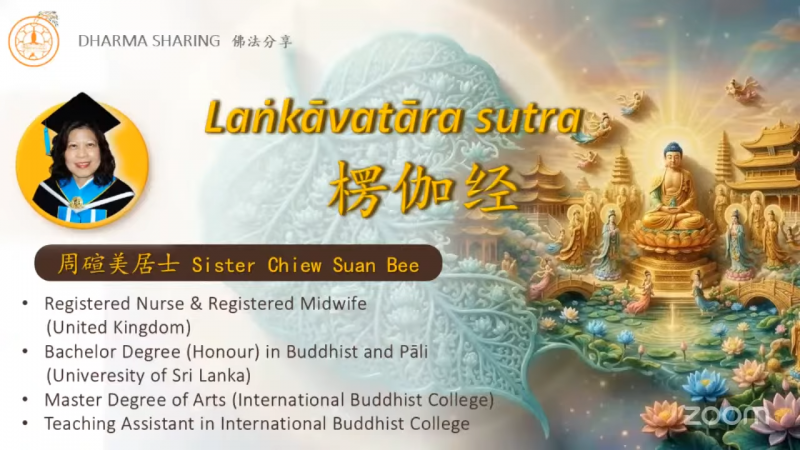
Teaching Assistant in International Buddhist College, Sister Chiew Suan Bee sharing “Laṅkāvatāra sutra”
THE LAṄKĀVATĀRA SŪTRA
(Chinese: léng qié jīng 楞伽经)
Historical background
• The Laṅkāvatāra Sūtra was composed in India in Sanskrit around the 4th century C.E.
• Translated by D.T. Suzuki from original Sanskrit to English, complied in nine chapters.
• Laṅkāvatāra is translated as “the sūtra that enters into Laṅkā”.
“Laṅkā” is said to be Sri Lanka, or an imaginary island south of India (Suzuki 1932:3). Buddhist tradition holds that the Buddha visited the island three times.
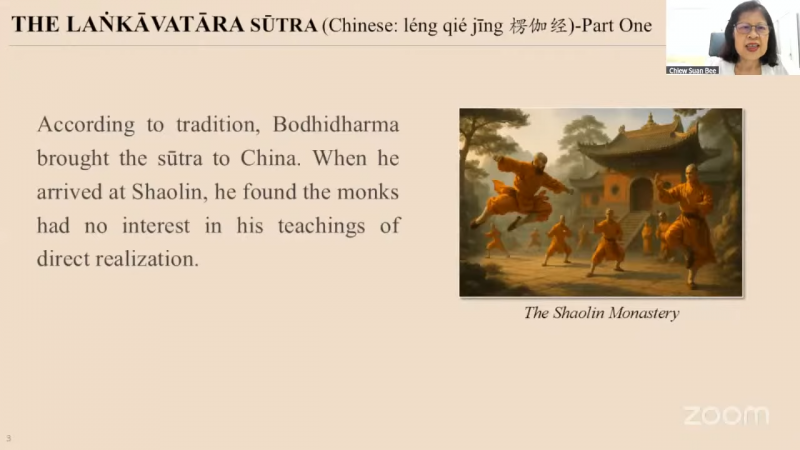
According to tradition, Bodhidharma brought the sūtra to China. When he arrived at Shaolin, he found the monks had no interest in his teachings of direct realization.
So, he withdrew to a mountain cave behind the monastery, where he sat facing the wall and meditated in silence for nine long years.
He gave the text to his disiple Huik’o, saying that everything he needed to know about the Dharma is in the sūtra.
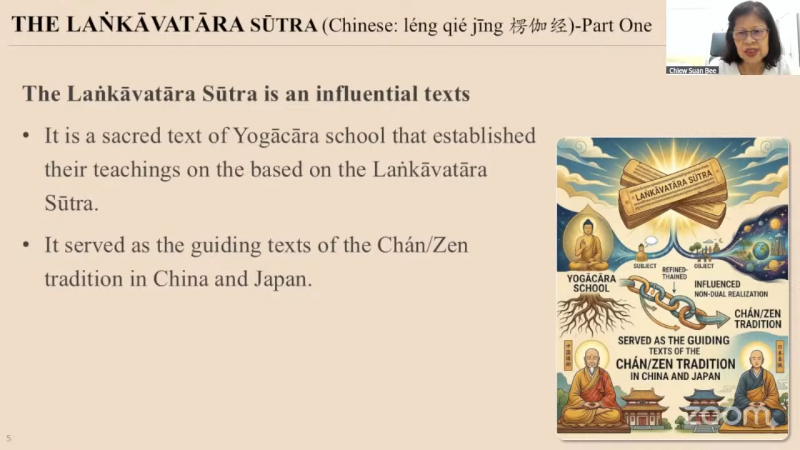
The Laṅkāvatāra Sūtra is an influential texts
It is a sacred text of Yogācāra school that established their teachings on the based on the Laṅkāvatāra Sūtra.
It served as the guiding texts of the Chán/Zen tradition in China and Japan.
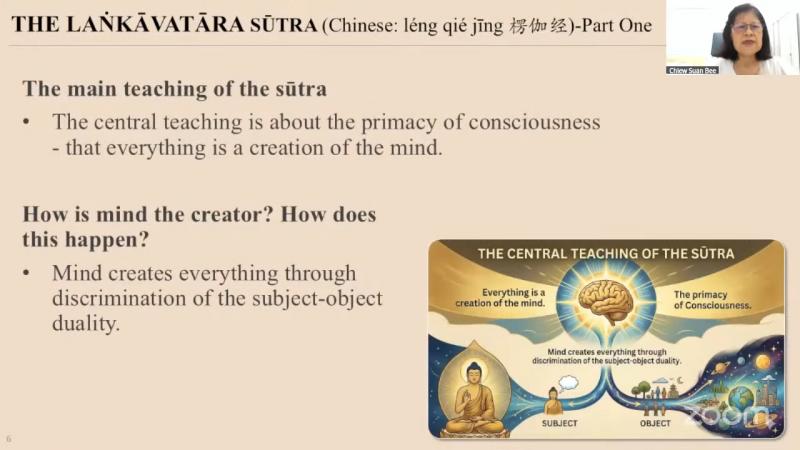
The main teaching of the sūtra
The central teaching is about the primacy of consciousness
- that everything is a creation of the mind.
How is mind the creator? How does this happen?
Mind creates everything through discrimination of the subject-object duality.
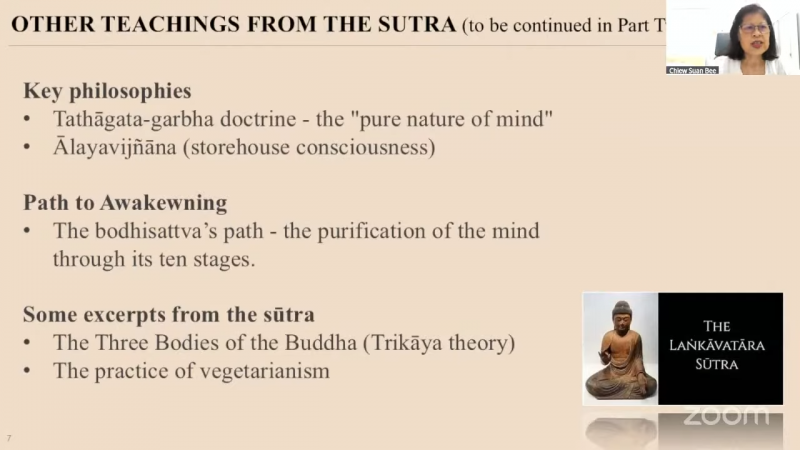
Other Teachings From The Sutra:Key philosophies
• Tathāgata-garbha doctrine - the "pure nature of mind"
• Ālayavijñāna (storehouse consciousness)Path to Awakewning
• The bodhisattva’s path - the purification of the mind through its ten stages.Some excerpts from the sūtra
• The Three Bodies of the Buddha (Trikāya theory)
• The practice of vegetarianism
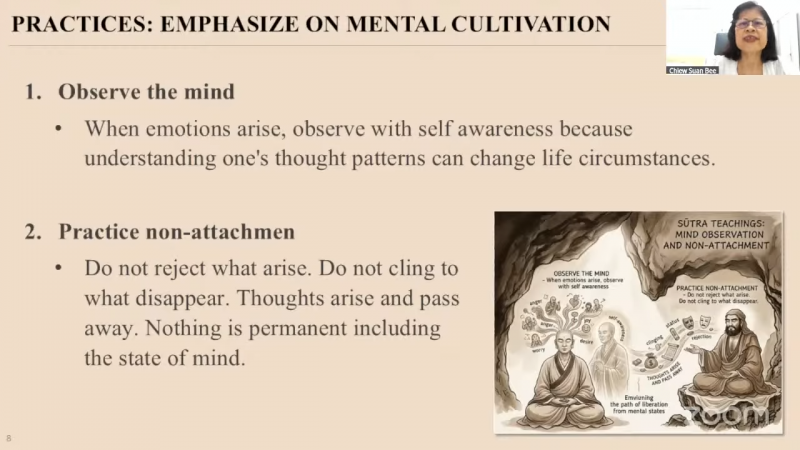
Practices: Emphasize On Mental Cultivation
1. Observe the mind
• When emotions arise, observe with self awareness because understanding one's thought patterns can change life circumstances.
2. Practice non-attachment
• Do not reject what arise. Do not cling to what disappear. Thoughts arise and pass away. Nothing is permanent including the state of mind.
3. Cultivate wisdom and practice compassion
• As a significant role of the bodhisattva.
4. Positive thinking
• Our thoughts shape our perception, mental state and foster correct understanding.
Bibliography:
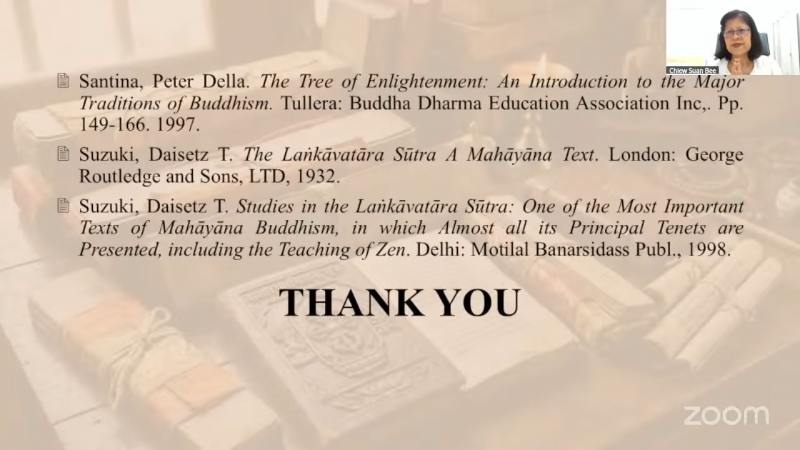
• Santina, Peter Della. The Tree of Enlightenment: An Introduction to the Major Traditions of Buddhism. Tullera: Buddha Dharma Education Association Inc,. Pp. 149-166. 1997.
• Suzuki, Daisetz T. The Laṅkāvatāra Sūtra A Mahāyāna Text. London: George Routledge and Sons, LTD, 1932.
• Suzuki, Daisetz T. Studies in the Laṅkāvatāra Sūtra: One of the Most Important Texts of Mahāyāna Buddhism, in which Almost all its Principal Tenets are Presented, including the Teaching of Zen. Delhi: Motilal Banarsidass Publ., 1998.
For more information, please browse https://youtu.be/WInpPBcInDQ
Spread the Buddha's teachings to guide more people to study Buddhism.
Continue diligently in the path studying the Buddha's teachings and listening to the Dharma.
Follow us on:
https://linktr.ee/thanhsiang